Post Mundane

Research

What we are actually finding.

We research this market because we have to sell into it, and the findings are more useful shared than hoarded. These are the open threads — what we currently believe, and what would change our minds.

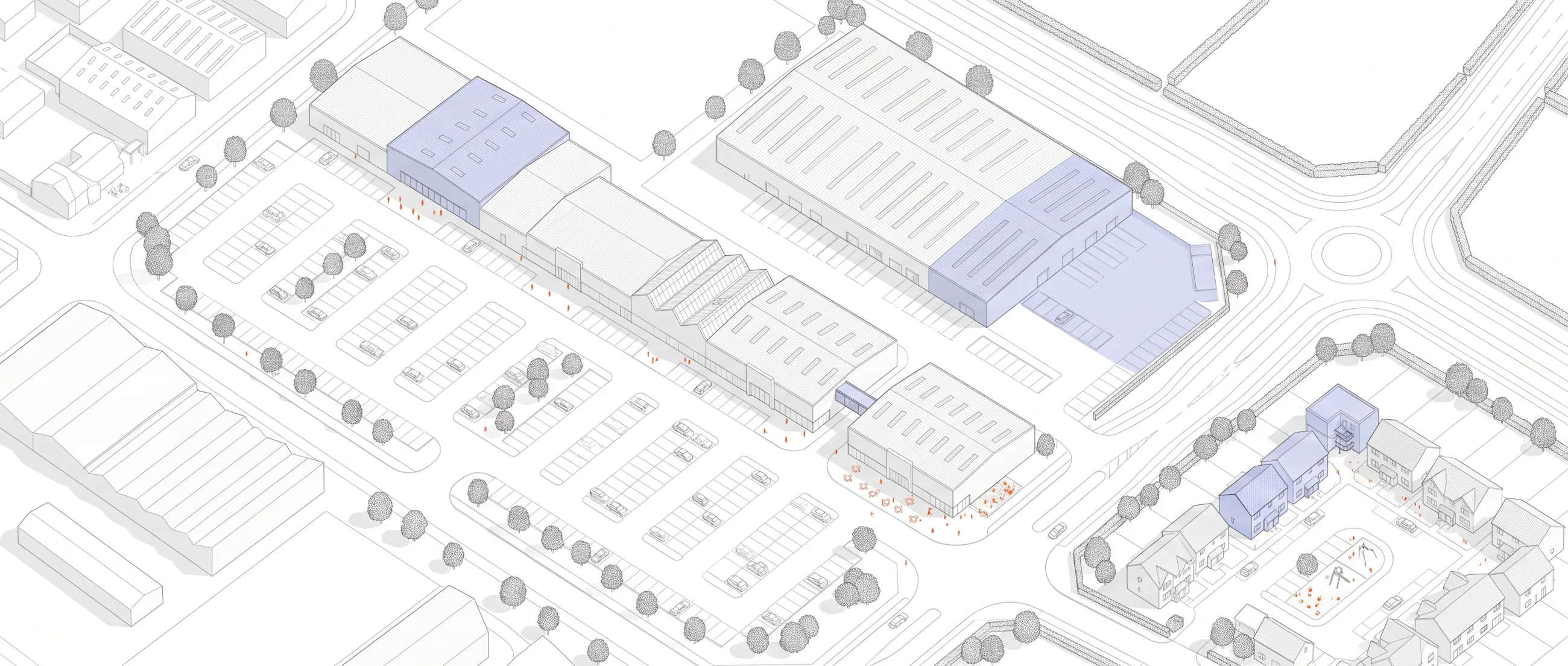
Axonometric — existing + proposed Axonometric drawing of an edge-of-town district, retail units and a large car park in grey outline with a few areas picked out in a pale blue highlight wash. 1:1000
01 Open threads Working notes

Adoption

Failure is an integration problem, and that makes it a consulting problem

MIT’s 2025 NANDA study found 95% of enterprise generative-AI pilots produced no measurable P&L impact, and that what separated the rest was workflow integration rather than model quality. If that holds, most of this market is selling the wrong thing: the constraint was never the model.

Source: MIT NANDA, State of AI in Business, 2025

Market

The tooling market has a hole in the middle

Priced development tooling sits in three bands: rendering at roughly $29–100 a month and commoditising fast, self-serve modelling from $18–615 a month and crowded, and professional feasibility starting around $15,000 a year behind a sales call. Almost nothing is transparently priced in between — and the pro forma, the thing developers actually decide on, usually sits behind the highest gate.

Working note — competitor pricing survey

Leverage

The money is in the approvals timeline, not the software

Ask where a development actually loses months and it is rarely the drawing. It is assembling a complete submission, discovering it was incomplete, and then grinding through multi-agency comments. Pre-checking a package against the jurisdiction’s own rulebook before filing, and compressing the comment–response cycle after, is worth more than anything that makes drawing faster.

Working note — entitlement leverage

Sourcing

You cannot out-data the incumbents, so out-judge them

The parcel and planning datasets are already owned by people with more money than us, and buying a thinner copy of them is a losing position. The defensible version is a scoring layer: extract the criteria your last good deal actually met, and rank sites against that, rather than selling another map.

Working note — site sourcing

Concept phase

Feasibility before the architect is the wedge

Test-fit plus pro forma can give a developer feasibility and several refinable schemes before anyone is engaged to draw them. That does not remove the architect — it moves them to where they are worth most, which is taking a chosen concept to construction rather than producing five to be discarded.

Working note — concept-phase economics

The long versions go out by email.

Each of these gets written up properly as the evidence firms up. No cadence, no growth funnel — it goes out when there is something worth saying.