Post Mundane

Method

Small first, and priced second.

You don’t need our track record. You need one result on your own data. So the first step is deliberately small, the second one is fixed-price, and nothing permanent happens until something temporary has already worked.

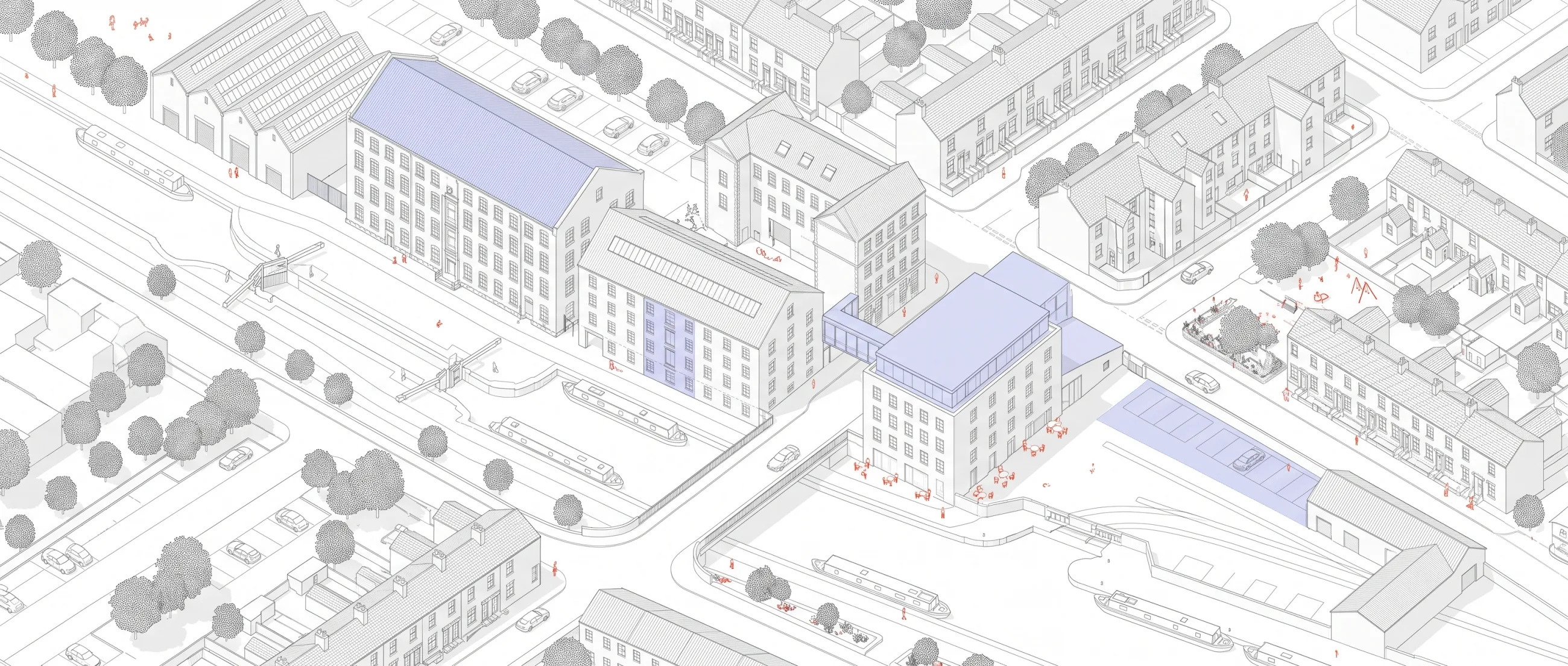
Axonometric — existing + proposed Axonometric drawing of a canalside quarter, former mills and terraced streets in grey outline with a few areas picked out in a pale blue highlight wash. 1:1000
01 The four stations Sequence
Station 00 Free · 30 minutes

Discovery

No deck. We ask about one live project — its phase, what is slow, what has already been tried — and you get a straight read on where this pays in a firm shaped like yours. If the honest answer is that it doesn’t pay yet, that is the answer you get, and it costs you half an hour.

  • One live file and whoever actually owns the number
  • A grounded read, including where AI is the wrong tool
  • Either a readiness audit, or nothing — both are fine
Station 01 Fixed price

Readiness audit

The audit is not a technology review. It works backwards from goals you already have, finds what is actually blocking them, and maps that to KPIs somebody on your board already owns — because a project measured against a number nobody owns is how most of the 95% happens. You end with targets and a recommended direction, and sometimes that direction is a tool we don’t sell.

  • Map the process as it runs, not as the org chart says
  • Rank the leverage points by what they are worth, not by ease
  • Targets, a direction, and a scope you can say no to
Station 02 KPI-tied · shared risk

Scoped build

One leverage point, built, in days rather than quarters. It is scoped against a KPI and a date instead of a feature list, and the date carries our risk as well as yours: miss it and we take 20% off. That clause exists because it changes what we are willing to promise, which is the only kind of guarantee worth reading.

  • One workflow, end to end, in production — not a pilot
  • Tied to a named KPI and a named date
  • Miss the date and the fee drops by 20%
Station 03 By invitation

The in-house brain

Only after the first three have gone well. Thirty years of your firm’s judgement — why you passed on that site, what that ward always asks for, which contractor’s numbers you halve — held as a system your people query and keep adding to. The point is not automation. It is that the knowledge stops leaving the building when someone retires.

  • Your data, your schema, your instance
  • Grows from the work rather than from a migration project
  • The most expensive thing we do, and the last
02 Things worth saying out loud Terms

Nobody loses a job to this

We are storing what your people know, not replacing the people who know it. If a scope reads as a headcount exercise, we are the wrong firm and we will say so at station 00.

We will recommend against ourselves

Sometimes the right answer is an off-the-shelf tool, a process change, or waiting six months. An audit that can only ever conclude “hire us” is not an audit.

Everything past thirty minutes is billable

Said upfront so it is never a surprise. The free half hour is genuinely free and genuinely half an hour; after that you are buying work, and you will know when we cross the line.